
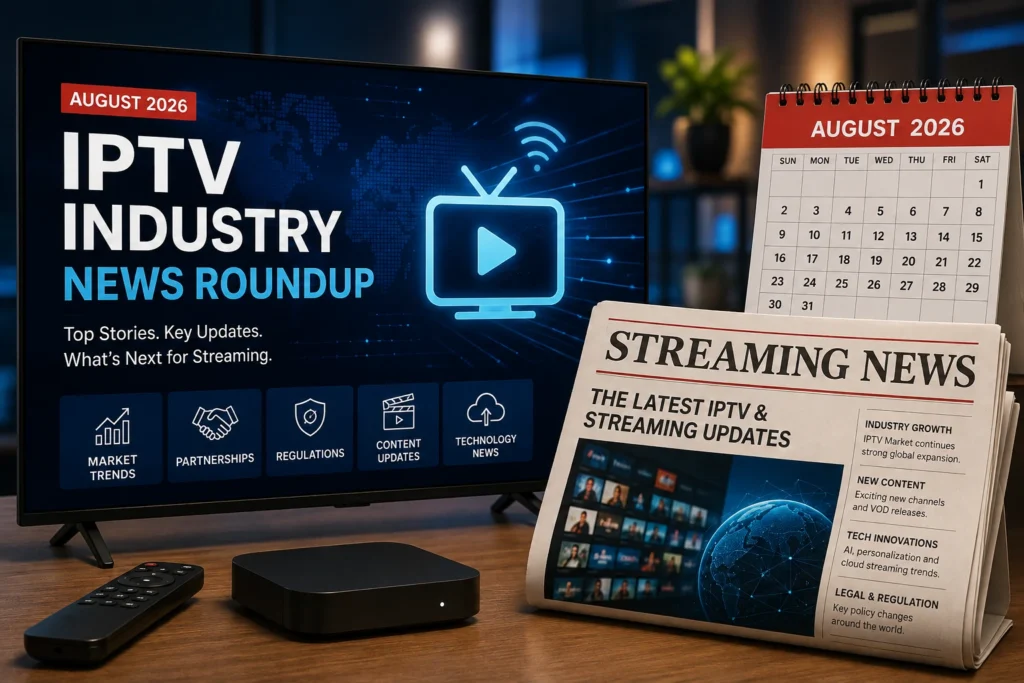
The IPTV and streaming world moved quickly over the past few weeks. From a major U.S. Department of Justice anti-piracy operation to new streaming device pricing and a fresh wave of FAST channel launches, this month’s IPTV industry news touched almost every part of the ecosystem.
Below is a plain-language roundup of the stories that actually matter for viewers and streaming enthusiasts — what happened, why it matters, and what to expect next. As always, BestProviderIPTV covers the legitimate side of the industry: legal services, licensed technology, and the infrastructure changes that shape how you watch.
Table of Contents
This Month at a Glance
- U.S. authorities seized more than 1,000 domains tied to unauthorized World Cup 2026 streaming
- Business Insider became the latest major publisher to launch its own FAST channel
- Amazon and Samsung began rolling out HDR10+ Advanced on Prime Video
- Streaming device prices rose across several major brands due to memory chip shortages
- Amazon continued its phased rollout of a redesigned Fire TV interface
Each of these stories reflects a broader pattern: the streaming industry is maturing, enforcement against unauthorized services is intensifying, and device makers are competing harder on both hardware and software experience.
Major Anti-Piracy Enforcement: Operation Offsides
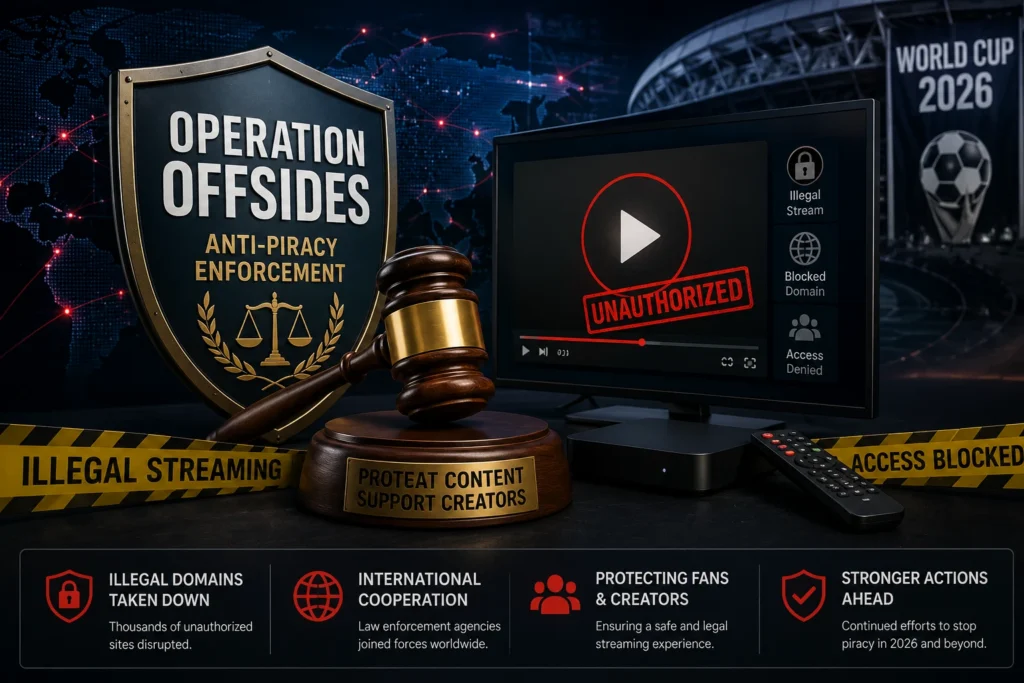
The single biggest legal story of the past month involves large-scale enforcement against unauthorized World Cup 2026 streaming. The U.S. Department of Justice announced the seizure of more than 1,000 internet domains used to illegally stream FIFA World Cup Finals matches, an action carried out under a program known as Operation Offsides. You can review the full announcement on the official Department of Justice press release.
The domains were identified with help from FIFA and several major rights holders, including NBCUniversal and the Motion Picture Association’s Alliance for Creativity and Entertainment. The U.S. action was paired with coordinated enforcement across Latin America and parts of Europe under a related initiative called Operation Red Card, which resulted in thousands of additional domain blocks and multiple arrests tied to unauthorized cable and streaming access.
Why This Matters for Viewers
Large-scale piracy crackdowns tend to follow major sporting events, since unauthorized “free stream” sites see the biggest traffic spikes during high-demand matches. These sites are frequently flagged not just for copyright issues but for genuine consumer risk, including malware exposure and payment fraud when sites request account or card details. If you’re evaluating any streaming or IPTV provider, a strong signal of legitimacy is transparency about content licensing and a real, verifiable business behind the subscription. For more background on protecting your accounts while streaming, see our [INTERNAL LINK: How to Spot a Legal IPTV Provider].
FAST Channels Keep Expanding: Business Insider Joins the Trend
Free Ad-Supported Streaming Television (FAST) continues to be one of the fastest-growing corners of the streaming industry, and this month brought another notable entrant. Business Insider launched a standalone FAST channel, partnering with ad-tech company Magnite to handle ad serving and programmatic monetization across connected TV platforms.
The move follows a broader pattern of publishers turning existing video libraries into always-on, ad-supported channels rather than building separate subscription products. Earlier this year, the New York Post took a similar step, launching its own FAST channel built from its existing video portfolio across its various brands.
What FAST Channel Growth Means for Your Lineup
For viewers, this trend translates into more free, ad-supported content appearing on the platforms you already use, including major smart TV interfaces and streaming boxes. No new subscription is required to access these channels since they’re funded through advertising rather than viewer payments.
If you’re unfamiliar with how FAST channels differ from traditional subscription streaming, our guide on [INTERNAL LINK: Latest IPTV Trends in 2026: What Has Changed?] covers the distinction in more detail.
Device and Platform Updates
HDR10+ Advanced Arrives on Prime Video
Amazon and Samsung announced that HDR10+ Advanced, the next generation of the existing HDR10+ video format, is rolling out globally on Prime Video this month. Unlike the original HDR10+ standard, which applies a single brightness curve across an entire frame, the advanced version supports localized tone mapping, allowing different brightness curves for specific regions within the same frame.
In practical terms, this should mean more accurate contrast and detail in scenes with both bright and dark areas — something viewers with newer HDR-capable TVs may start noticing as supported titles roll out. Compatibility depends on your specific TV and streaming device, so it’s worth checking your manufacturer’s HDR support documentation, such as Samsung’s official display technology resources, before expecting the new format to appear automatically.
Streaming Device Prices Are Rising
Several major streaming device brands have raised prices over the past few months, a trend tied to a global shortage of RAM and storage chips driven partly by demand from AI data centers. Streaming devices are particularly affected because memory and storage components make up a larger share of their overall cost compared to many other consumer electronics.
Roku has already implemented multiple price increases this year, and Apple raised the price of the Apple TV as well. Industry observers expect other major brands, including Fire TV devices, to follow with similar adjustments. If you’ve been planning to buy a new streaming device, it may be worth comparing current prices across retailers rather than waiting, since further increases are considered likely in the near term.
Fire TV’s Interface Redesign Continues Rolling Out
Amazon’s first major Fire TV interface overhaul in several years continues to expand to more devices this year. The redesign introduces a new top navigation bar, cross-app content organization by category, a larger row for pinned apps, and integration of Amazon’s Alexa+ assistant into search. Amazon has stated the update improves navigation speed by roughly 20–30% on supported devices.
The rollout has been staged rather than immediate, reaching newer Fire TV Sticks and Fire TV Cube devices first, with older hardware receiving the update in phases. If your Fire TV device hasn’t changed yet, this staged approach is the most likely explanation. You can check your device’s current software version through the official Amazon Fire TV support documentation.
What These Changes Mean for Viewers
Taken together, this month’s developments reinforce a few consistent themes across the IPTV and streaming industry:
| Trend | What’s Happening | Impact on Viewers |
|---|---|---|
| Piracy enforcement | Large, coordinated domain seizures tied to major sports events | Fewer unauthorized “free stream” options; higher risk for those who use them |
| FAST channel growth | More publishers launching ad-supported channels | More free content available without new subscriptions |
| Video quality standards | New HDR formats rolling out to major platforms | Better picture quality on supported devices, gradually |
| Device economics | Component shortages driving price increases | Streaming hardware may cost more in the coming months |
| Platform software | Major interface redesigns from device makers | Easier navigation, but also more promotional space on home screens |
Common Problems Readers Ask About This Month’s News
If you’ve been affected by any of these changes, a few quick fixes address the most common questions:
- My Fire TV interface still looks the same. The redesign is rolling out in phases; check for pending software updates in your device settings, and be patient if your device is older.
- I don’t see HDR10+ Advanced content yet. Support depends on both your TV’s hardware and whether specific titles have been mastered in the new format; this will expand gradually.
- A streaming site I used stopped working. If a “free” or unusually cheap streaming source suddenly disappeared, it may have been affected by ongoing enforcement actions. This is a good opportunity to switch to a transparent, licensed provider.
Frequently Asked Questions
1. What was Operation Offsides?
Operation Offsides was a U.S. Department of Justice initiative that resulted in the seizure of more than 1,000 domains used for unauthorized streaming of FIFA World Cup 2026 matches.
2. Are FAST channels free to watch?
Yes. FAST (Free Ad-Supported Streaming Television) channels are funded through advertising rather than subscription fees, so viewers don’t pay to access them.
3. What is HDR10+ Advanced?
HDR10+ Advanced is an updated version of the HDR10+ video format that supports localized tone mapping, allowing more precise brightness and contrast within individual scenes.
4. Why are streaming device prices going up?
A global shortage of RAM and storage chips, driven in part by demand from AI data centers, has increased manufacturing costs for streaming devices, leading several brands to raise prices.
5. Is my current streaming device affected by the Fire TV redesign?
Only Fire TV devices are affected, and the rollout is staged by device model, so not all units have received the update yet.
6. Does anti-piracy enforcement affect legal IPTV services?
No. Enforcement actions target unauthorized services distributing copyrighted content without permission. Licensed IPTV and streaming providers that operate with proper content rights are not affected.
7. How can I tell if an IPTV service is legitimate?
Legitimate providers are transparent about their content licensing, offer clear billing, and are verifiable businesses. Extremely low prices for large channel bundles are a common warning sign.
Final Thoughts
This month’s IPTV industry news reflects an industry that continues to professionalize on multiple fronts at once: stronger anti-piracy enforcement, expanding free ad-supported content, evolving video quality standards, and shifting device economics. None of these changes require immediate action from most viewers, but they’re useful context for understanding why your streaming experience — and its cost — may look a little different in the coming months.